
Burst Pipes and Supply Lines
Shutoff coordination, standing-water extraction, moisture mapping, and drying for failures inside walls, ceilings, cabinets, and floor assemblies.
Serving Greensboro, North Carolina & surrounding areas
Rapid water removal, controlled drying, cleanup, and repairs for homes and businesses affected by leaks, overflows, or storms.
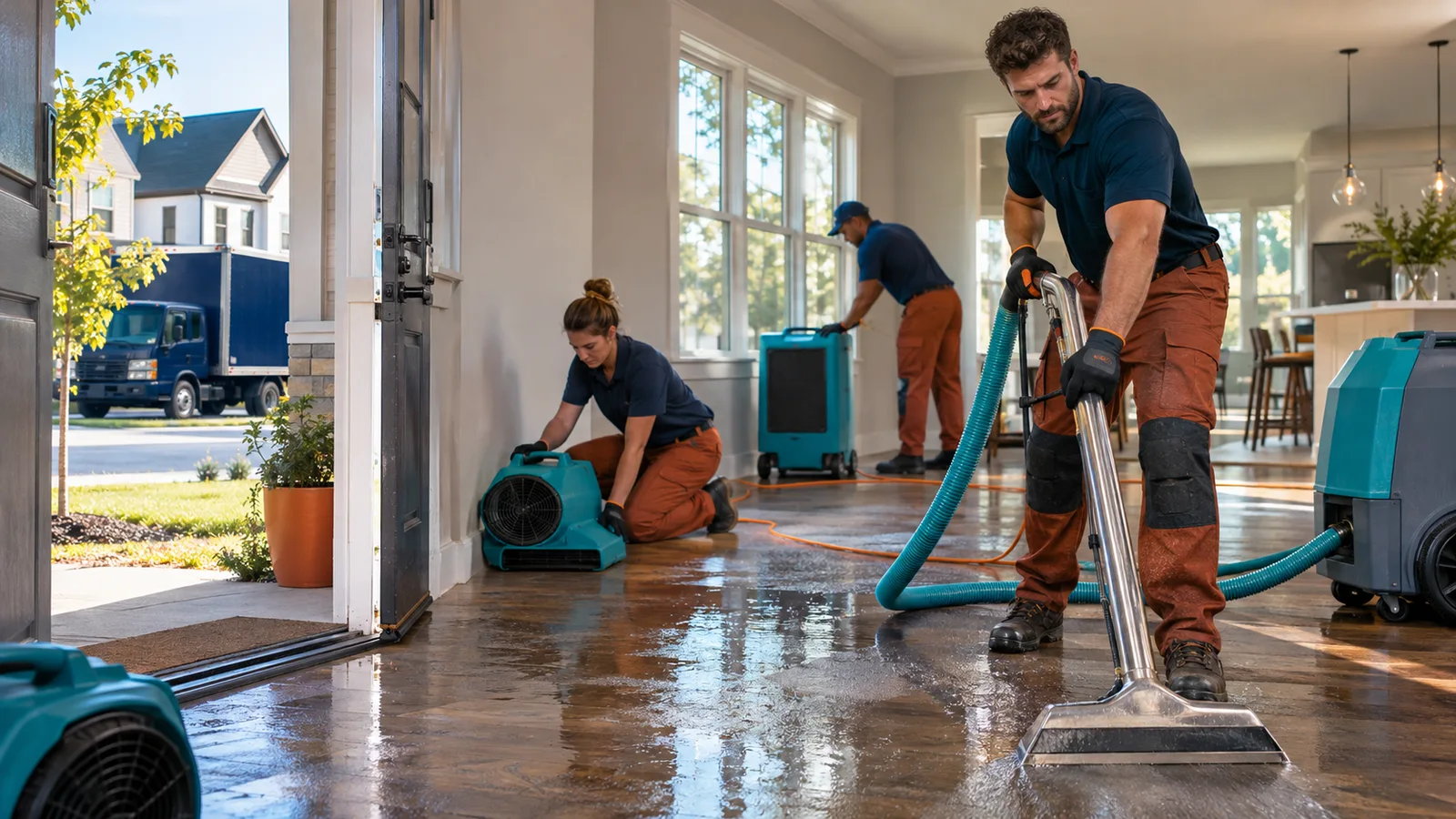
Water damage in Greensboro requires prompt action because moisture can travel under flooring, behind baseboards, and into wall cavities. Removing visible water is only the first step. The affected materials must be inspected, moisture levels measured, and the structure dried to a defensible standard before repairs begin.
Water Damage Restoration Greensboro NC handles water extraction, material removal when necessary, structural drying, cleaning, and repair planning. As water damage restoration specialists serving Greensboro, we base the work on the source of the loss, the materials affected, and moisture readings rather than appearances alone. The goal is to limit further damage while preserving materials that can be dried safely.
Greensboro properties can face plumbing failures, appliance leaks, roof intrusion, storm runoff, and sewage backups. Summer humidity can slow natural evaporation, so simply opening windows or running household fans may leave moisture trapped in porous materials. Commercial air movers and dehumidifiers create controlled drying conditions, while moisture meters help determine when affected areas are ready for reconstruction.
Shutoff coordination, standing-water extraction, moisture mapping, and drying for failures inside walls, ceilings, cabinets, and floor assemblies.
Cleanup for washing machine hoses, water heaters, dishwashers, refrigerators, toilets, tubs, and sinks, including moisture that has spread beyond the visible leak.
Interior water removal and drying after wind-driven rain or roof leakage. The exterior entry point must be corrected before permanent interior repairs are completed.
Containment, removal of affected porous materials, cleaning, and application of appropriate disinfectants. Contaminated losses require stricter handling than clean supply-water leaks.
Phased extraction and drying plans for offices, retail spaces, rental properties, and other occupied buildings, with attention to access and business interruption.
Once moisture targets are met, repair planning may address drywall, insulation, trim, paint, flooring, cabinets, and other materials removed during mitigation.
A proper inspection starts with the source. If water is still entering the building, the supply must be shut off or the opening stabilized before extraction proceeds. Technicians then identify the affected area with noninvasive moisture meters and, when needed, penetrating meters that test inside materials. Infrared imaging may help locate temperature patterns associated with moisture, but meter readings are used to confirm the findings.
Water is classified by contamination level. Category 1 begins as water from a sanitary source, such as a supply line. Category 2 contains significant contamination, while Category 3 includes sewage and other grossly contaminated water. Conditions can worsen with time and contact with contaminated materials. The category affects protective equipment, cleaning methods, containment, and what can be retained.
The inspection also considers the materials involved. Solid wood, concrete, drywall, insulation, engineered flooring, carpet, and cabinetry absorb and release moisture differently. Drying plans must account for assemblies such as hardwood over a wood subfloor or finished walls with insulation inside. This prevents a dry surface from being mistaken for a dry structure.
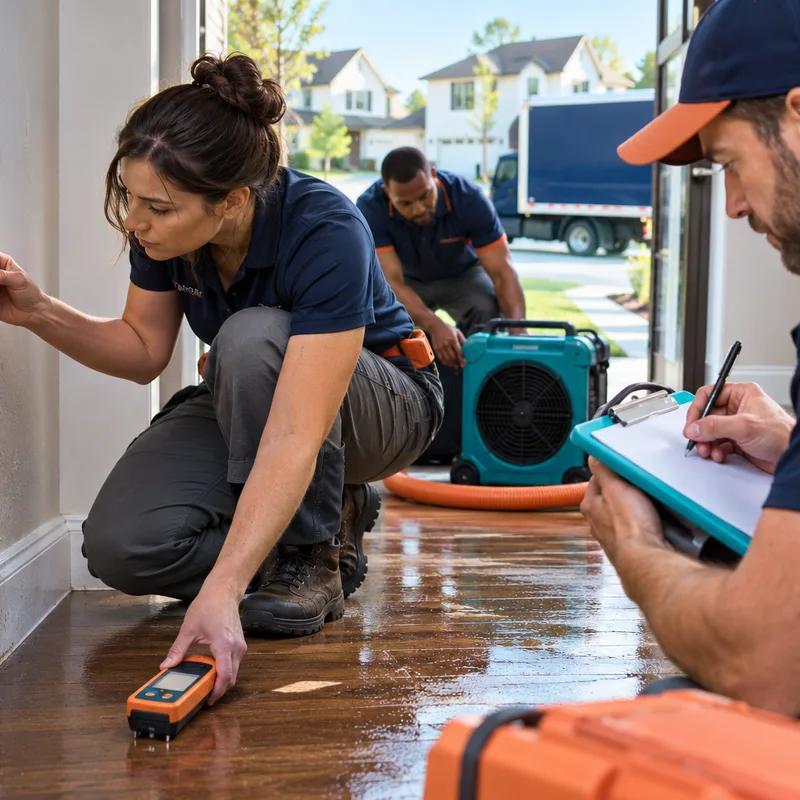
The first priority is stopping incoming water when it can be done safely. The assessment checks for electrical risks, weakened ceilings, contamination, and other conditions that affect access.
Photos and moisture readings establish where water traveled and which materials are involved. The initial record can also support communication with a property owner or insurance adjuster.
Portable or truck-mounted extraction equipment removes bulk water. Fast extraction reduces the amount that must later be removed through evaporation and dehumidification.
Contaminated or badly damaged porous materials may require controlled removal. Decisions depend on the water category, material condition, exposure time, and whether the assembly can be dried effectively.
Air movers promote evaporation, while dehumidifiers capture moisture from the air. Equipment placement and conditions are adjusted as readings show how the building is responding.
Affected surfaces are cleaned according to the type of loss. After drying goals are documented, the repair scope can address removed drywall, trim, insulation, paint, and flooring.
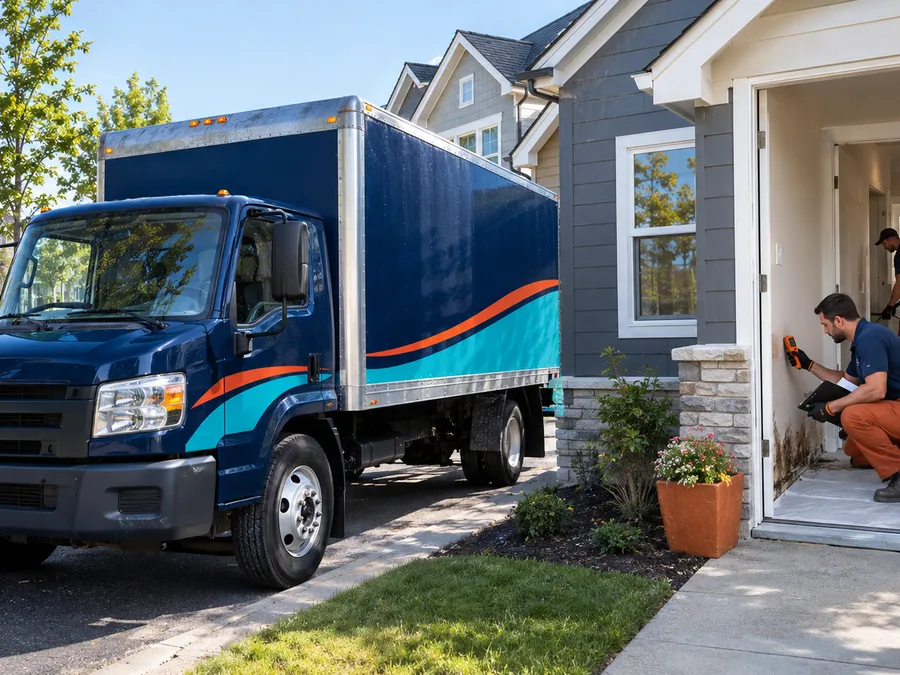
Greensboro's warm, humid periods can make uncontrolled drying less effective. Bringing humid outdoor air into a wet building may add moisture rather than remove it, so technicians compare indoor conditions and use dehumidification to manage the drying chamber. During colder weather, burst pipes can create losses in walls, crawl spaces, and unheated areas.
Building type matters as much as weather. Older homes around College Hill may contain plaster walls, wood flooring, and layered finish materials that call for careful testing before demolition. Downtown Greensboro commercial properties may require work zones, scheduled access, and drying plans that keep unaffected areas usable. In newer residential areas such as Adams Farm, water can spread under continuous flooring into rooms that initially appear unaffected. Properties near Lake Jeanette may have finished lower levels or crawl spaces where inspection must include concealed framing and insulation.
When stormwater or a municipal sewer issue may be involved, the source must be distinguished from an interior plumbing failure. Greensboro Water Resources handles public water and sewer infrastructure, but damage inside the property still requires immediate mitigation and documentation.
Water damage restoration in Greensboro typically ranges from $1,200 to $5,000 for a limited clean-water loss, while extensive drying, contaminated-water cleanup, or reconstruction can cost $5,000 to $15,000 or more. These are general, nonbinding ranges.
Final pricing depends on water category, affected square footage, material removal, equipment needs, drying duration, access, and required repairs. Emergency mitigation and reconstruction may be priced separately, and insurance coverage depends on the policy and cause of loss. The exact cost is confirmed after an on-site inspection and written scope.
Property insurance may cover sudden and accidental water damage, but coverage depends on the policy, the cause, and any exclusions. Long-term seepage, maintenance problems, groundwater, and flooding are often treated differently from a sudden pipe break. A restoration contractor can document conditions and provide a work scope, but the insurer decides coverage.
If you plan to file a claim, report the loss promptly and keep photos, receipts, moisture records, and removed-material documentation. Reasonable emergency steps should be taken to prevent additional damage when the property is safe to enter. Avoid permanent repairs until the affected assemblies have been inspected and the scope is understood.
A useful restoration estimate separates emergency mitigation from repair work. It should identify extraction, containment, demolition, drying equipment, monitoring, cleaning, and reconstruction as applicable. Water Damage Restoration Greensboro NC can explain which materials appear salvageable, why removal is recommended in other areas, and what must happen before repairs start.
Visible water can be removed quickly, but hidden moisture requires measurement. Arrange an assessment before damp materials cause a larger repair scope.
Request Emergency ServicePractical answers about cleanup timing, structural drying, insurance, mold concerns, occupancy, and what to do before help arrives.
Cleanup should begin as soon as the source is controlled and the building is safe to enter. Availability depends on current demand, access, and the type of loss. During major Triad storms, request an assessment promptly and shut off the water supply if an interior plumbing failure is active and the shutoff is safely accessible.
Many limited losses require several days of controlled drying, but dense materials, concealed cavities, high humidity, and widespread saturation can extend the schedule. Progress should be based on recorded moisture levels and indoor conditions rather than a fixed number of days. Repairs begin after affected assemblies reach appropriate drying goals.
Wet hardwood may be salvageable when extraction and specialty drying start promptly and the water is not contaminated. The answer depends on the wood type, finish, subfloor, moisture gradient, and degree of cupping or buckling. Greensboro's humid weather makes monitoring and dehumidification especially important during floor drying.
You should report the loss promptly, but urgent steps to prevent additional damage generally should not wait when the property is safe to enter. Photograph conditions, keep damaged materials when practical until they are documented, and retain invoices. Your adjuster determines coverage under the policy, while the restoration scope addresses immediate property conditions.
Minor surface growth may sometimes be addressed during cleaning, but established or widespread mold requires a separate assessment and containment plan. Mold can begin developing in persistently damp materials, so prompt extraction and drying reduce the conditions that support growth. The extent, material type, and contamination determine the appropriate work.
Occupancy depends on electrical safety, contamination, access, noise, temperature control, and how much of the home is affected. A contained clean-water loss may allow parts of the property to remain usable. Sewage, extensive demolition, or loss of essential rooms may make temporary relocation the safer choice.
Stop the water source if it is safe, avoid standing water near electrical equipment, and move undamaged valuables away from the affected area. Do not use a household vacuum for water removal or disturb sewage-contaminated materials. Take photos from a safe position and note when the loss was discovered.
Describe the water source, affected rooms, and when the loss was discovered. We will outline the immediate safety steps, inspection process, and likely scope of cleanup.